

Ampaire Is Electrifying the Future of Aviation With Hybrid-Electric Aircraft Technology
Ampaire’s Vision Of Making Regional Aviation Cleaner, Quieter, and More Affordable
Aviation is one of the hardest sectors to electrify because aircraft must carry their energy source while keeping weight as low as possible. For regional aviation, however, there is an opportunity to introduce hybrid-electric propulsion that can reduce fuel consumption without requiring aircraft to rely entirely on batteries. Ampaire is pursuing exactly that approach, developing hybrid-electric propulsion systems designed for short-haul and regional aircraft.
The California-based company has accumulated more than 38,000 hybrid-electric flight miles, giving it significant real-world experience with the technology. Its approach combines conventional aviation engines with electric propulsion and battery systems, allowing aircraft to use electricity where it provides the greatest efficiency benefits while retaining liquid fuel for longer-distance and higher-power requirements. The objective is not simply to make aircraft electric, but to create commercially viable aircraft that consume substantially less fuel and produce fewer emissions.
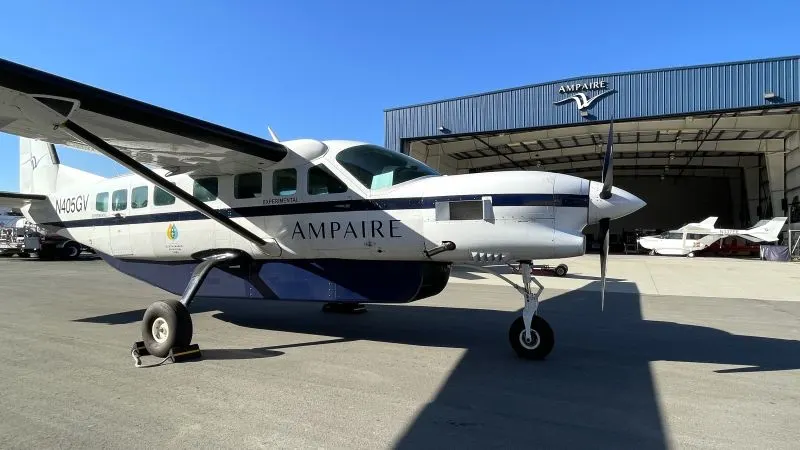
Ampaire says its Eco Caravan has demonstrated approximately 54% to 57% lower total fuel burn than the legacy turboprop configuration during flight testing, including fuel used to recharge its batteries. That level of efficiency could be particularly important for regional routes, where operating costs have a major influence on whether smaller communities can maintain reliable air connections. Ampaire’s broader vision is therefore about making regional aviation more economically sustainable as well as environmentally cleaner. Instead of waiting for battery technology to become powerful enough for large commercial aircraft, the company is using today’s available technologies to create a transition path toward increasingly electrified flight.
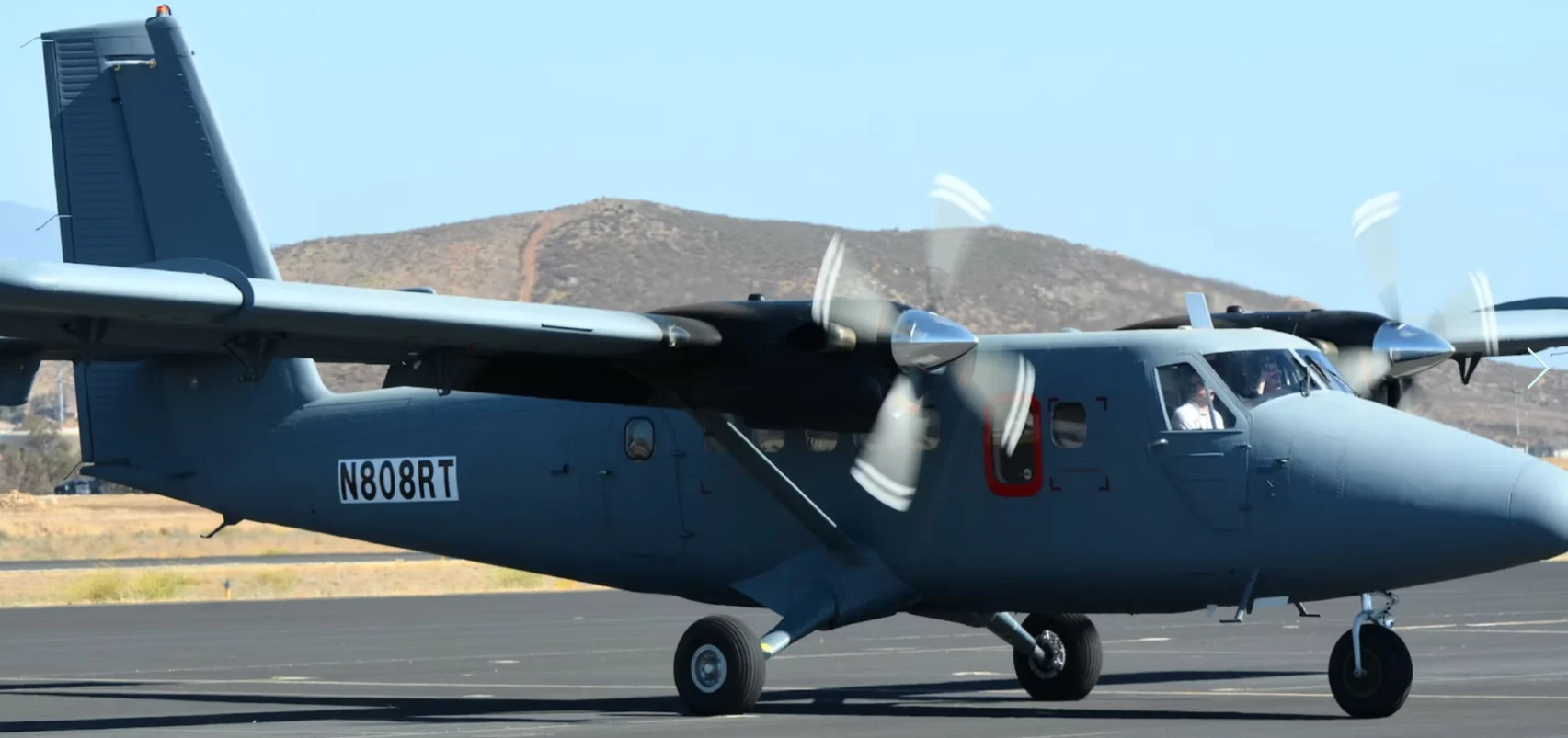
Ampaire’s Technology and Aircraft Portfolio: Electric EEL, Eco Caravan, Eco Otter, and Tailwind
Ampaire has developed a portfolio of aircraft and propulsion technologies aimed at demonstrating different approaches to hybrid-electric aviation. The company’s Electric EEL became an important test platform for its technology, allowing Ampaire to conduct real-world flight testing and validate hybrid-electric propulsion in an aircraft environment. The Eco Caravan is now one of the company’s most important commercial products. Based on the Cessna Caravan platform, it combines conventional propulsion with Ampaire’s hybrid-electric system to target regional passenger, cargo, and utility operations. The aircraft is designed to demonstrate that substantial fuel savings can be achieved without requiring operators to completely replace existing aviation infrastructure or adopt an entirely new aircraft category.
Ampaire is also developing the AMP-H570, a hybrid-electric propulsion system designed to provide a pathway toward larger and more capable aircraft applications. The company has been advancing certification work on both the AMP-H570 and Eco Caravan as it moves from flight demonstrations toward commercial deployment. Other aircraft concepts in Ampaire’s portfolio include the Eco Otter and Tailwind, reflecting the company’s broader ambition to develop propulsion solutions across different regional aviation platforms. Its work is supported by projects involving organizations including NASA and ARPA-E, as well as commercial airline partners.
Ampaire’s strategy is significant because aviation electrification will likely happen in stages. Fully battery-electric aircraft may initially be practical only for shorter routes and smaller aircraft, while hybrid-electric propulsion could provide a bridge for larger regional aircraft where batteries alone cannot yet deliver sufficient energy density. By developing propulsion systems that can be integrated into existing aircraft architectures, Ampaire is attempting to accelerate that transition without waiting for a complete transformation of the aviation ecosystem.
Ampaire Raises $19 Million in Series B Financing Led by DiamondStream Partners
Ampaire’s progress has attracted significant financial and strategic backing as the company moves toward commercializing its hybrid-electric technology. The company has closed a $19 million Series B financing led by DiamondStream Partners, with strategic participation from Alaska Airlines and International Airlines Group (IAG). The latest financing brings Ampaire’s total funding to approximately $68 million, including around $25 million in non-dilutive grants and contracts. The new capital is intended to help the company expand commercial route operations under the FAA’s eIPP programme, produce additional Eco Caravan aircraft, advance certification of the AMP-H570 and Eco Caravan, and expand its engineering and operational capabilities.
Ampaire also plans to strengthen its supply chain, manufacturing, and aftermarket infrastructure as it prepares for larger-scale operations. The participation of major aviation companies is particularly significant because successful aircraft commercialization requires more than proving a propulsion system can fly. Manufacturers need operators, maintenance networks, certification pathways, supply chains, and customers willing to adopt the technology. Ampaire’s growing relationships across the aviation industry could therefore help it move from experimental flight testing toward commercial service. With more than 38,000 hybrid-electric miles already completed, the company has accumulated a substantial flight-testing record, but certification and production remain major milestones.
If Ampaire can successfully commercialize the Eco Caravan and advance its larger propulsion systems, it could demonstrate that hybrid-electric aircraft are capable of delivering meaningful fuel savings on real regional routes. The longer-term opportunity is even larger. Regional aviation could become one of the first commercial aviation segments where hybrid-electric propulsion reaches meaningful scale, creating a practical pathway toward lower-emission air travel while battery technology continues to improve.