


From Divers to Drones: BeeX’s Vision for Autonomous Oceans
Meet BeeX’s Autonomous Underwater Fleet
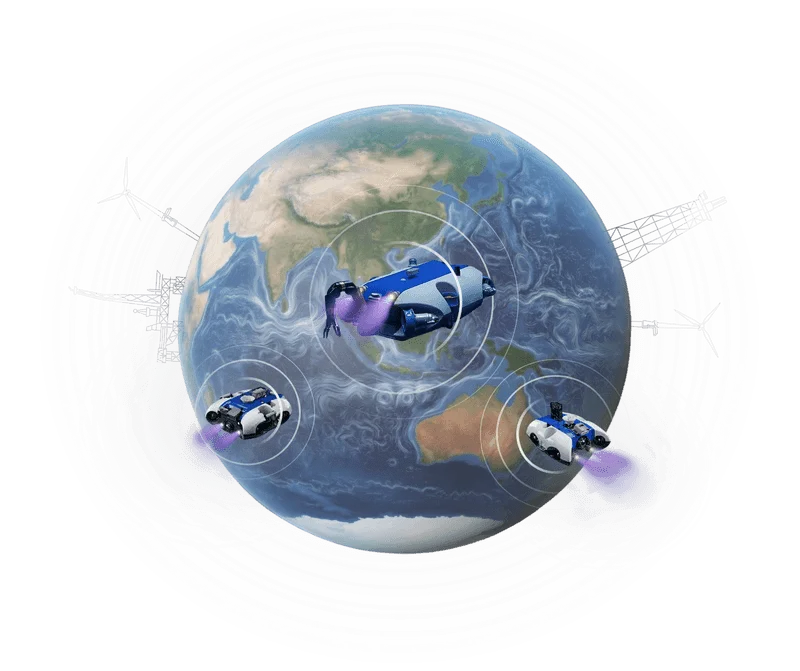
The world’s oceans remain among the least automated operating environments despite supporting critical infrastructure worth trillions of dollars. Underwater inspections have traditionally relied on commercial divers, remotely operated vehicles (ROVs), and large offshore support vessels, making them expensive, time-consuming, and often hazardous. Singapore-based BeeX is working to change that through a fleet of fully autonomous underwater vehicles designed to operate with minimal human supervision. Its robotic platforms, including A.IKANBILIS and BETTA, are built to carry out repeatable inspections while collecting high-quality underwater data across challenging marine environments.
Rather than selling robots alone, BeeX offers a Robotics-as-a-Service model, allowing customers to access autonomous inspection capabilities without building their own robotic operations. By combining AI, autonomous navigation, and years of proprietary subsea intelligence, the company aims to replace conventional underwater inspection workflows with a scalable, data-driven alternative.
Safeguarding Underwater Borders: BeeX’s Growing Defense Role
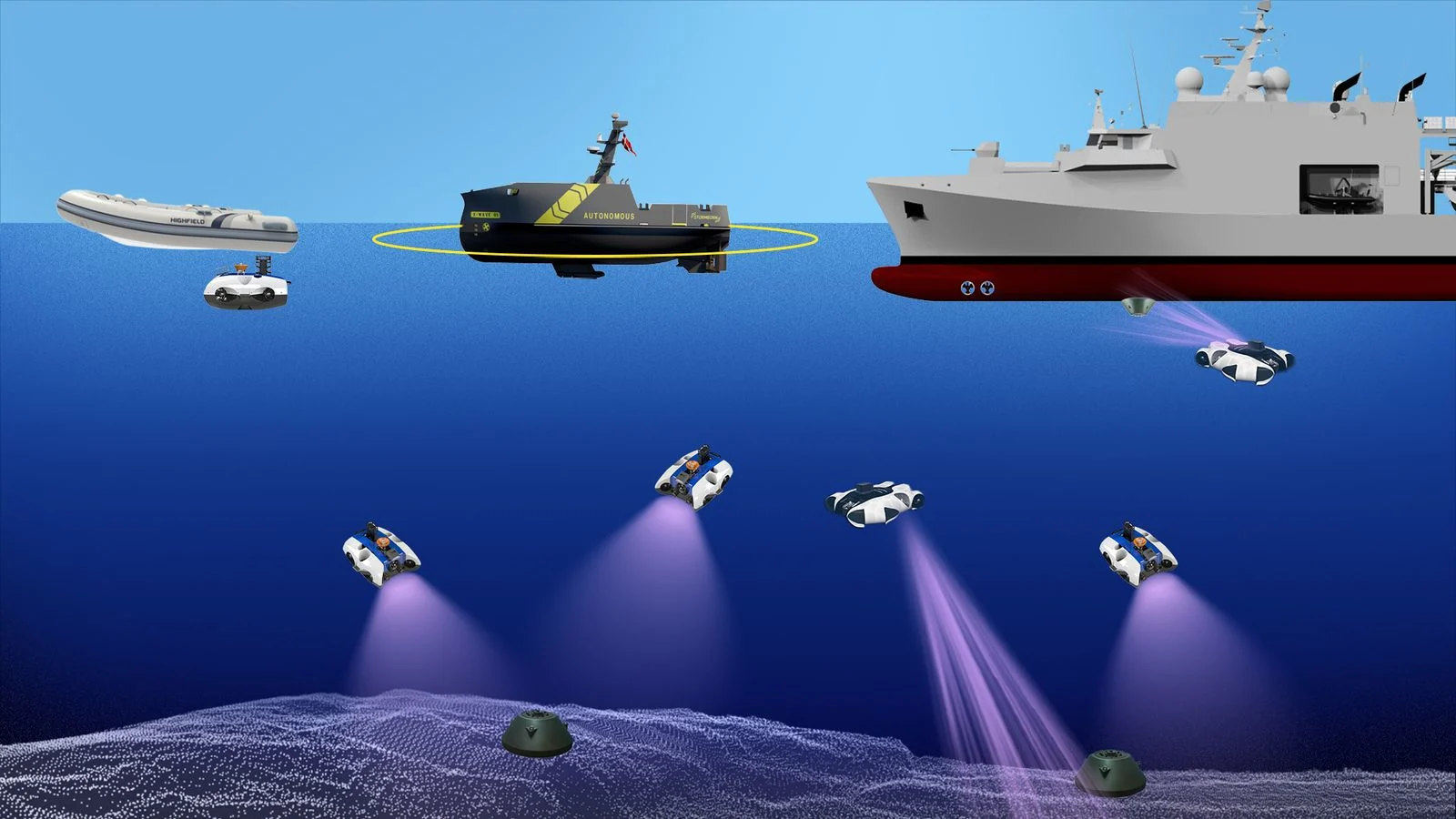
Maritime security is becoming an increasingly important application for autonomous underwater systems. Nations must protect naval bases, shipping lanes, subsea communication cables, energy infrastructure, and territorial waters from evolving threats that include underwater drones, sabotage, and unexploded ordnance. Continuous monitoring of these environments is difficult using conventional methods because human-operated missions are costly and cannot easily provide persistent coverage.
BeeX is positioning its autonomous systems to address this challenge. The company has secured drone acquisition contracts with the Singapore Ministry of Defence and is expanding its role in underwater defense operations. Its autonomous platforms are designed to support mine countermeasure missions, underwater surveillance, infrastructure monitoring, and other security applications where long-duration autonomous operations provide operational advantages. As geopolitical attention increasingly shifts toward maritime security, autonomous underwater vehicles may become as strategically important below the surface as aerial drones have become above it.
Building Smarter Coastlines with Autonomous Inspections
Beyond defense, coastal infrastructure represents another major opportunity for autonomous underwater robotics. Ports, bridges, seawalls, harbors, subsea communication cables, and marine foundations require regular inspections to identify corrosion, structural damage, sediment accumulation, and other issues before they become costly failures. Traditional inspection programs often require vessel mobilization, dive teams, and significant operational downtime.
BeeX’s autonomous inspection model seeks to make these activities more efficient through repeatable, AI-assisted data collection. Autonomous drones can inspect underwater assets more frequently while generating standardized datasets that enable engineers to compare infrastructure conditions over time. This allows governments, municipalities, and infrastructure operators to move from reactive maintenance toward predictive asset management. As coastal infrastructure continues expanding worldwide, the ability to inspect underwater environments safely, consistently, and at lower cost is becoming increasingly valuable.
Powering the Future of Offshore Energy
The rapid growth of offshore energy infrastructure is creating new demand for autonomous subsea inspection technologies. Offshore wind farms, oil and gas platforms, subsea pipelines, transmission cables, and renewable energy installations all require continuous monitoring throughout their operational lifecycles. As these assets expand farther offshore, traditional inspection methods become increasingly expensive and operationally complex.
BeeX is applying its autonomous fleet across offshore energy projects where routine inspections are essential for safety, regulatory compliance, and operational reliability. By reducing dependence on large support vessels and human dive operations, autonomous underwater vehicles can lower inspection costs while increasing inspection frequency. This enables operators to identify maintenance requirements earlier and minimize unplanned downtime. As offshore renewable energy continues growing alongside conventional offshore infrastructure, AI-powered underwater robotics may become a foundational component of future asset management strategies.
A $7.7 Million Vote of Confidence in Autonomous Oceans
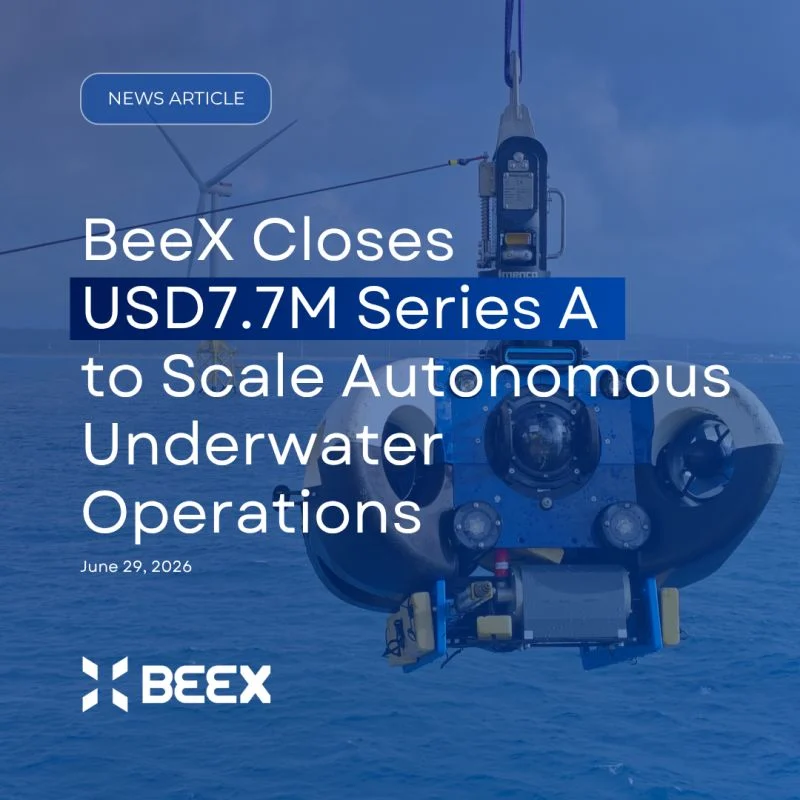
BeeX recently secured US$7.7 million in Series A funding led by Monk’s Hill Ventures to accelerate the expansion of its autonomous underwater robotics platform. The investment will support growth of the company’s drone fleet, international operations, and continued development of autonomous inspection technologies for defense, infrastructure, and offshore energy markets.
The funding reflects growing investor confidence that underwater robotics is entering a new phase of commercial maturity. While aerial drones have become widely adopted across numerous industries, underwater autonomy has historically progressed more slowly because of the complexity of operating beneath the surface. Advances in artificial intelligence, navigation, sensing, and autonomous control are now enabling companies like BeeX to bring scalable robotic operations into environments that were previously difficult to automate.
As oceans become increasingly important to global security, energy production, communications, and trade, autonomous underwater systems are likely to play a much larger role in maintaining the critical infrastructure hidden beneath the waves. BeeX is positioning itself at the center of that transformation.
Autonomous robotics has already transformed the skies, warehouses, and factories. The next frontier lies beneath the ocean’s surface. BeeX is demonstrating how AI-powered underwater vehicles can make subsea inspections safer, more frequent, and more scalable, positioning autonomous ocean operations as a critical part of future defense, infrastructure, and energy ecosystems.