


Xpander Is Building the Control Layer for Enterprise AI Agents
How Xpander Is Helping Enterprises Build, Deploy, and Govern AI Agents
Building an AI agent is becoming easier, but deploying one reliably inside a real enterprise environment remains considerably more complicated. Developers need to manage runtime infrastructure, memory, state, tools, integrations, authentication, triggering mechanisms, monitoring, and security while also ensuring that agents can communicate with other systems and AI agents.
Xpander is attempting to provide this infrastructure as a unified platform, allowing builders to focus primarily on the logic and behaviour of their agents. Its platform provides an AI agent runtime environment alongside memory and state management, agentic tools, integrations, and multiple ways to trigger or communicate with agents. Developers can connect agents through channels and protocols including Slack, MCP, A2A, and webhooks, while the platform supports major AI agent frameworks and different underlying models. Xpander also provides a visual workbench intended to make it easier for developers to build, test, and iterate on agents.
This infrastructure-first approach could become increasingly important as enterprises move toward deploying fleets of AI agents rather than isolated copilots. Instead of every development team building its own agent infrastructure from scratch, Xpander wants to provide a common control layer that can support agents across different applications and models. Security is another important part of this proposition because enterprise agents may eventually have access to sensitive information, internal systems, and business-critical workflows. By combining development infrastructure with deployment and governance capabilities, Xpander is positioning itself as an underlying platform for businesses attempting to become genuinely AI-native.
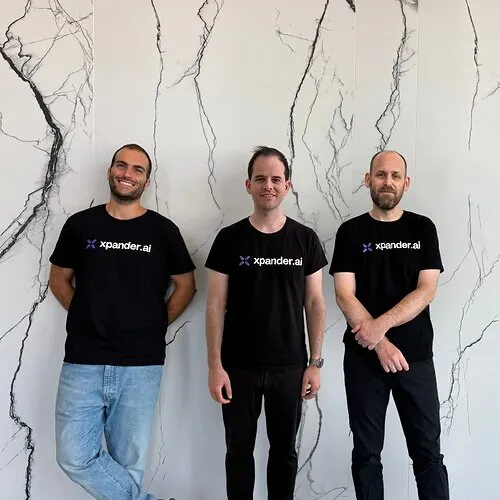
Meet the Founders: Moriel Pahima, David Twizer, and Ran Sheinberg
Xpander was founded around the idea that the biggest challenge in enterprise AI is no longer simply building an AI agent, but giving that agent the infrastructure required to operate reliably in production. David Twizer, co-founder and CEO, leads the company with a focus on making agentic AI practical for enterprises, while Ran Sheinberg, co-founder and Chief Product Officer, brings experience across enterprise technology, AWS, and AI agent architecture. Sheinberg has been closely involved in developing Xpander’s approach to agent reliability, including its Agent Graph System, which helps agents navigate complex APIs and tools more systematically.
Moriel Pahima is also part of the founding team, contributing to the company’s product and technology direction as Xpander builds its broader enterprise AI platform. The founders’ approach is reflected in Xpander’s decision to remain vendor-neutral, supporting different AI models and agent frameworks rather than locking customers into a single ecosystem. The company is also focused on the operational side of AI, including runtime environments, persistent memory, tool access, integrations, governance, observability, and deployment across cloud, private, and on-premise environments. That focus reflects a growing realization that enterprise AI agents will need infrastructure similar to the infrastructure that allowed conventional software applications to scale.
As companies move from experimenting with individual agents to deploying entire ecosystems of them, Xpander’s founders are betting that the organizations that control the underlying agent runtime and governance layer will play a critical role in determining how safely and effectively autonomous AI becomes part of everyday business operations.
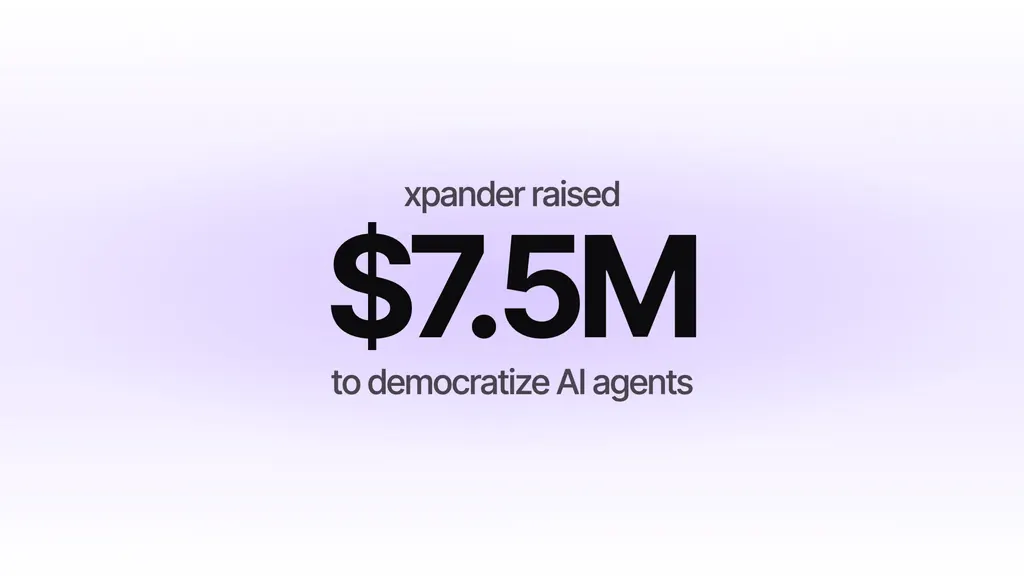
Xpander Raises $7.5M in Seed Funding Led by PICO Venture Partners
Xpander’s vision has attracted $7.5 million in seed funding, led by PICO Venture Partners, with participation from Emerge Ventures, Samsung Next, and SeedIL Ventures. The funding is intended to help Xpander expand its platform and pursue its goal of democratizing AI agents so that more businesses can become AI-native. The investment arrives as enterprises are moving beyond the initial wave of generative AI experimentation.
Companies are increasingly looking for ways to deploy agents that can perform multi-step tasks, interact with internal systems, and operate with a degree of autonomy. That shift creates a new infrastructure challenge because an organization may need to manage dozens or eventually thousands of agents with different responsibilities, permissions, tools, and data requirements. Xpander’s opportunity is to become the infrastructure layer that makes this agent ecosystem manageable. Its support for multiple AI frameworks, models, communication protocols, and triggering mechanisms could allow businesses to build an agent environment without committing entirely to one technology stack.
The company’s $7.5 million funding round gives it capital to continue developing this infrastructure and expanding adoption among developers and enterprises. The larger question is whether the AI industry will converge around dedicated agent platforms in the same way that cloud infrastructure became essential to modern software development. If autonomous agents become a standard component of enterprise software, the companies providing the runtime, security, memory, integration, and governance layers could become some of the most important infrastructure providers in the AI economy. Xpander is betting that this control layer will be essential to making that future practical.