

Beyond ChatGPT: Why Ineffable Intelligence Wants AI to Discover Knowledge on Its Own
AI Has Learned From Humanity. What Comes Next?
The current generation of artificial intelligence has achieved remarkable capabilities by learning from human knowledge. Large language models have absorbed enormous collections of text, code, images, and other data, allowing them to answer questions, write software, generate content, and reason across increasingly complex problems. But Ineffable Intelligence believes this paradigm has a fundamental limitation: machines are still largely learning what humanity has already discovered.
The London-based AI lab, founded by former Google DeepMind reinforcement-learning leader David Silver, is pursuing a radically different idea. Its goal is to create what it calls a “superlearner”, an AI system capable of discovering knowledge directly through its own experience rather than relying on human data.
The company argues that reinforcement learning provides a path toward this goal because an AI agent can interact with an environment, take actions, observe consequences, learn from successes and failures, and continually improve. This is fundamentally different from asking an AI model to predict the next word or imitate examples produced by humans. The machine would instead generate its own experiences and use them to develop capabilities that may not exist in its training data. Silver’s previous work offers an important clue to why he believes this approach could work.
At DeepMind, David Silver led the development of AlphaGo and AlphaZero, systems that demonstrated how reinforcement learning could produce strategies that surprised even expert human players. AlphaGo’s famous “Move 37” during its match against Lee Sedol became an early example of an AI discovering a move that human experts had not anticipated. Ineffable is attempting to take that philosophy much further, moving from systems that master specific games to a general learning system capable of discovering knowledge across many domains.

David Silver Wants to Win the Race to Build AI That Can Teach Itself
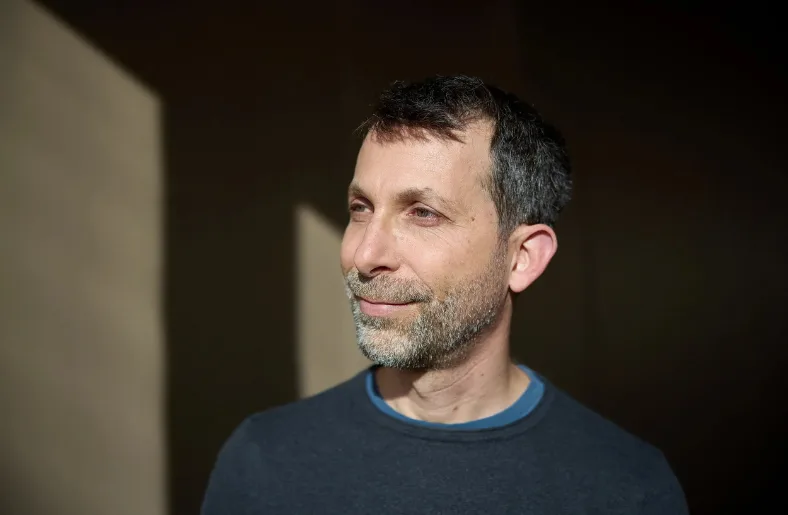
David Silver brings an unusual track record to Ineffable Intelligence. Before founding the company, he spent more than a decade at DeepMind and led some of the world’s most influential reinforcement-learning projects, including AlphaGo, AlphaZero, AlphaStar, and related research. He is also a professor at University College London. His new company is built around a thesis that directly challenges the dominant direction of frontier AI.
Silver argues that human-generated data has been an extraordinarily useful shortcut, but it ultimately represents knowledge that already exists. If AI is going to discover genuinely new science, mathematics, technology, or other forms of knowledge, it needs a mechanism for learning beyond the boundaries of what humans have already produced. Ineffable’s answer is an AI system that can learn continuously through experience.
The company describes its proposed superlearner as a system that could discover everything from elementary motor skills to profound intellectual breakthroughs, with reinforcement learning providing the underlying learning mechanism. This is an extraordinarily ambitious proposition, and the company is still at an early stage. Ineffable emerged publicly in 2026 and is focused on assembling a research and engineering team capable of pursuing the problem. Its approach has nevertheless attracted extraordinary financial and institutional support.
The company has raised $1.1 billion in seed funding at a $5.1 billion valuation, with backing from investors including Sequoia Capital, Lightspeed, NVIDIA, Index Ventures, Google, DST Global, and the UK’s Sovereign AI Fund. NVIDIA has also partnered with Ineffable to develop reinforcement-learning infrastructure, recognizing that systems learning continuously through experience could require enormous computational resources. The scale of the backing shows that investors are treating Silver’s thesis as more than an academic experiment, even though proving it will require major advances in AI research.
What Happens When Machines Discover What Humans Don’t Know?
The most fascinating part of Ineffable Intelligence’s vision is also the hardest to predict. If machines can genuinely learn through experience without depending on human-generated examples, they could potentially explore questions that humanity has never answered. An AI system capable of generating and testing hypotheses, designing experiments, interacting with sophisticated simulations, and learning continuously could theoretically discover new scientific principles or engineering solutions that human researchers would struggle to find.
Ineffable describes its ambition as eventually rediscovering and transcending major human inventions such as language, science, mathematics, and technology. That does not mean the company has already demonstrated such capabilities. The gap between today’s reinforcement-learning systems and a general-purpose superlearner remains enormous, and building environments in which an AI can safely and productively learn about the physical and intellectual world is itself a major research challenge. There are also fundamental questions about how such systems would be evaluated.
If an AI discovers knowledge that humans do not already understand, conventional benchmarks may not be sufficient to determine whether its discoveries are correct, useful, or safe. The implications extend beyond scientific progress. Ineffable explicitly argues that superintelligence should be developed in a way that is beneficial to humanity and believes continual learning could eventually produce systems that improve indefinitely. If that vision becomes technically achievable, the consequences could be enormous.
AI would no longer simply be a tool trained to reproduce and manipulate the accumulated knowledge of civilization. It could become a system that continuously expands its own understanding through interaction with the world. That would represent a profound change in the trajectory of artificial intelligence. Ineffable Intelligence is effectively betting that the next great AI breakthrough will not come from giving machines more human knowledge, but from giving them the ability to discover knowledge that humanity does not yet possess. Whether that bet succeeds remains one of the most intriguing questions in frontier AI.