

Top 10 AI Tools for Radiologists
How AI Is Changing Radiology Workflows?
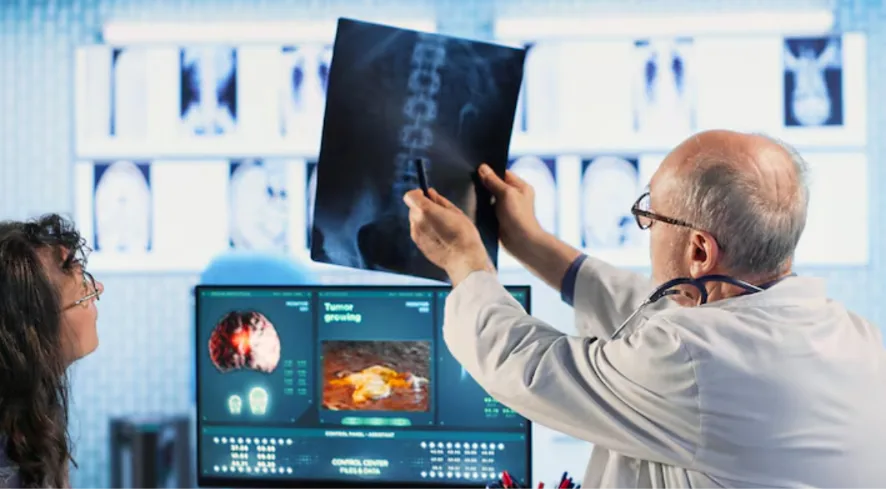
Radiology departments handle large volumes of medical images, diagnostic studies, and reporting tasks. Artificial intelligence is increasingly being integrated into these workflows to help radiologists identify potential abnormalities, prioritize urgent cases, improve reporting efficiency, and coordinate patient care. These applications range from algorithms that analyze chest X-rays and CT scans to platforms that generate report impressions, manage follow-up recommendations, and connect multiple AI models within a single environment.
The tools in this list serve different purposes. Some focus on image interpretation and triage, while others support reporting productivity, clinical communication, or AI deployment. They are intended to assist healthcare professionals, not replace radiologists or independent clinical judgment.
10 Best AI Tools for Radiologists
1. Aidoc (aiOS)
Aidoc develops clinical AI solutions designed to help radiologists detect potential abnormalities, prioritize urgent cases, and coordinate patient care. Its aiOS platform acts as an enterprise clinical AI operating system, bringing multiple AI algorithms and workflows together through a unified infrastructure. Rather than focusing on a single imaging application, aiOS allows healthcare organizations to run different algorithms across imaging studies and present relevant findings within existing clinical systems. Its orchestration capabilities use imaging data, scan metadata, and other information to determine which studies should be processed.
Aidoc’s radiology solutions include AI-assisted detection and triage for conditions such as intracranial haemorrhage, pulmonary embolism, and other urgent findings. The platform integrates with PACS, EHR, mobile, and care coordination systems, helping clinical teams receive alerts and prioritize cases. Aidoc also provides governance capabilities covering algorithm performance, drift detection, validation, and usage analytics. The company reports deployments across more than 1,600 hospitals and 150 health systems.
2. Oxipit
Oxipit develops AI-powered medical imaging solutions focused on chest X-rays, CT scans, and musculoskeletal imaging. Its CXR Suite includes three important capabilities: ChestLink, ChestEye, and quality assurance tools. ChestLink is designed to autonomously identify high-confidence normal chest X-ray examinations and generate reports for eligible cases without requiring routine radiologist interpretation. It received CE Class IIb certification and was introduced as an autonomous reporting solution for normal chest X-rays. ChestEye, meanwhile, supports the detection of abnormalities across chest X-ray images and can generate preliminary findings for radiologist review.
Oxipit has expanded its product portfolio beyond chest radiography into CT and musculoskeletal imaging, extending its applications across additional diagnostic workflows. An important ownership development occurred in 2026: Swedish medical imaging technology company Sectra completed its acquisition of Oxipit on April 15, 2026. Oxipit is now part of Sectra, which is integrating its autonomous AI capabilities into its wider enterprise imaging portfolio.
3. Rad AI
Rad AI focuses on improving radiology reporting productivity, speech workflows, and follow-up management through artificial intelligence. Its product portfolio includes Rad AI Reporting, Rad AI Impressions, and Rad AI Continuity. Rad AI Impressions uses generative AI to create report impressions based on radiologists’ findings, adapting to individual reporting styles and terminology. The system is designed to work with existing speech recognition software, templates, and reporting systems rather than requiring radiologists to adopt an entirely new documentation environment.
Rad AI Reporting focuses on the reporting process itself, offering real-time speech capabilities, pre-generated stable findings for unchanged follow-up examinations, and quality checks before reports are finalized. Rad AI Continuity addresses another important part of radiology operations: tracking incidental findings and ensuring recommended follow-up actions are communicated and completed. The company says its platform monitors more than 50 categories of actionable incidental findings. Rad AI is particularly relevant to radiology groups looking to improve reporting efficiency and reduce gaps in follow-up care.
Read More: 10 AI Tools Helping Doctors Save Time
4. Viz.ai
Viz.ai develops AI-powered clinical coordination and imaging analysis software that helps healthcare organizations identify suspected conditions and accelerate communication between care teams. Its Viz Radiology suite is designed specifically for radiology workflows. The platform analyzes medical images to flag potential findings, prioritize imaging worklists, and provide radiologists with AI-assisted information within their existing PACS environment.
Its capabilities extend beyond abnormality detection. Viz.ai also connects radiologists with referring physicians and other clinical teams through real-time communication tools, helping ensure that potentially urgent findings reach the appropriate specialists. The platform integrates with PACS, EHR, and other hospital IT systems, allowing organizations to incorporate AI alerts into existing workflows.
Viz.ai’s broader clinical platform supports disease detection and care coordination across areas such as stroke, cardiovascular disease, and other time-sensitive conditions. For radiology departments, its value lies in combining imaging AI with worklist prioritization and communication, helping reduce delays between identifying a potential problem and initiating the next clinical step.
5. deepc
deepc develops clinical AI infrastructure that helps healthcare organizations integrate, deploy, and manage artificial intelligence across medical imaging and other clinical workflows. Its deepcOS platform provides a centralized environment through which hospitals can connect commercial AI applications, internally developed models, and research solutions.
For radiology departments, this approach can simplify the process of evaluating and introducing multiple AI applications without creating a separate integration project for every vendor. The platform connects with existing clinical systems, including PACS, EHR, reporting, and other hospital infrastructure. Its workflow capabilities support the configuration and deployment of AI applications, while governance features provide visibility into performance, usage, incidents, and model drift.
deepc also emphasizes standardized inputs and outputs, audit trails, and continuous monitoring across deployed workflows. The company is positioning deepcOS as an infrastructure layer for health systems that want to scale AI adoption beyond isolated diagnostic applications. It is particularly relevant to hospitals managing multiple imaging AI vendors and looking for a consistent way to oversee them.
6. Rayscape
Rayscape develops AI-powered imaging software for chest X-rays and CT scans, with applications in thoracic radiology, lung cancer screening, and oncology follow-up. Its CXR solution analyzes chest X-rays and identifies more than 148 pathologies, helping radiologists locate potential abnormalities and prioritize cases for review. It can also generate additional image visualizations, including bone-suppressed and subtracted images, and calculate the cardiothoracic ratio. Its Lung CT solution focuses on pulmonary nodule detection, measurement, and longitudinal tracking.
The software can identify nodules measuring between 3 and 30 millimetres, calculate their dimensions and volume, and compare findings across previous examinations. It also provides information relevant to established clinical guidelines, including Fleischner recommendations and Lung-RADS. These capabilities are useful in lung cancer screening and routine CT examinations where incidental pulmonary nodules may require follow-up. Rayscape integrates with existing PACS infrastructure and can return AI-generated findings and reports for radiologist review.
Read More: Top 10 Remote Patient Monitoring Platforms in the USA
7. Qure.ai
Qure.ai develops AI solutions for medical imaging, with a portfolio covering chest X-rays, head CT scans, and other radiology applications. Its qXR product analyzes chest X-rays to identify abnormalities involving the lungs, pleura, mediastinum, bones, diaphragm, and heart. It can generate AI overlays and pre-filled reports to assist radiologists with image interpretation and reporting. The system also supports the identification of normal examinations, helping imaging centres manage high-volume reporting workflows.
Qure.ai’s broader portfolio includes qER for head CT analysis, which helps identify findings associated with conditions such as intracranial haemorrhage, stroke, and traumatic brain injury. Its solutions are used in clinical settings as well as screening programmes, including tuberculosis and lung cancer initiatives. The company says qXR has been deployed across more than 90 countries and 3,100 sites. It supports cloud and on-premises deployment, making it suitable for healthcare organizations with different infrastructure requirements. Qure.ai’s focus on multiple imaging modalities gives radiologists access to AI assistance across several diagnostic workflows.
8. CARPL.ai
CARPL.ai is a radiology AI marketplace and enterprise deployment platform rather than a single diagnostic imaging application. It helps hospitals, imaging centres, and radiology groups discover, evaluate, validate, deploy, and monitor AI applications from multiple vendors through one integrated environment. Its marketplace offers more than 300 AI applications from over 100 vendors, covering different imaging modalities, anatomical areas, and clinical use cases.
Radiology teams can evaluate applications using their own imaging data before deciding which solutions to deploy. CARPL also provides a universal AI viewer that allows radiologists to review and interact with outputs from different AI applications through a common interface. Its infrastructure supports integration with existing PACS environments and can be deployed on-premises or in the cloud. The platform also includes AI orchestration, workflow automation, and post-deployment monitoring capabilities.
In July 2026, CARPL.ai announced a $10 million Series A funding round led by the International Finance Corporation. Its model is particularly relevant to healthcare organizations seeking access to multiple AI tools without managing separate integrations for every vendor.
9. Blackford Analysis
Blackford Analysis provides a vendor-neutral platform that helps healthcare organizations evaluate, integrate, deploy, and manage AI applications for medical imaging. Rather than developing a single diagnostic algorithm, Blackford gives radiology departments access to a portfolio of third-party imaging AI applications through a common technical infrastructure.
Its platform supports more than 140 AI applications, covering different clinical indications and imaging workflows. The Blackford platform includes an interoperability engine designed to connect AI applications with existing PACS and hospital systems using standards such as DICOM and HL7. Its configurable dataflow capabilities help route imaging studies to the appropriate algorithms and return results to the relevant clinical systems.
Radiology teams can also use its dashboard and analytics capabilities to monitor application performance and deployment activity. A further feature is its ability to evaluate AI applications before deployment, allowing organizations to assess how solutions fit their workflows. Blackford is particularly relevant to hospitals that want flexibility in selecting imaging AI vendors while maintaining a centralized integration and management environment.
10. Lunit
Lunit develops AI-powered medical imaging solutions focused on cancer detection and diagnostic support. Its Lunit INSIGHT portfolio includes applications for chest X-rays, mammography, and digital breast tomosynthesis. Lunit INSIGHT CXR analyzes chest X-rays to identify thoracic abnormalities, including findings associated with tuberculosis and other lung conditions. The system can highlight suspected abnormalities and flag high-confidence normal examinations to support radiology workflow prioritization.
For breast imaging, Lunit INSIGHT MMG assists with identifying suspicious lesions and assessing breast density in mammograms, while its DBT solution supports analysis of three-dimensional breast imaging studies. These applications are designed to integrate with existing PACS and radiology workflows through standard imaging formats.
Lunit says its radiology AI solutions are deployed at more than 10,000 sites and have been evaluated in over 400 peer-reviewed publications. Its product portfolio is particularly relevant to radiologists working in chest imaging and breast cancer screening, where AI can provide additional image analysis and decision support.
Read More: Top 10 Remote Patient Monitoring Platforms in the USA
What Radiologists Should Evaluate Before Adopting AI
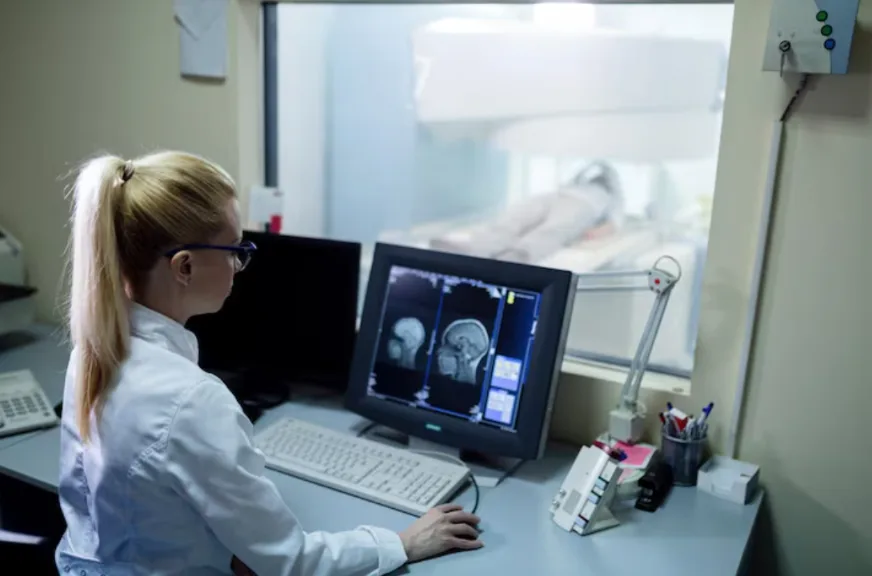
Selecting an AI tool for radiology requires more than comparing the number of abnormalities an algorithm can detect. Healthcare organizations should evaluate the specific clinical indications supported by each product, its regulatory clearances in the relevant market, and the evidence from independent clinical validation. Integration with existing PACS, RIS, and EHR systems is equally important because AI findings need to reach radiologists within their established workflows.
Departments should also examine reporting compatibility, processing speed, deployment requirements, data security, and the ability to monitor performance after implementation. Another important distinction is whether a tool provides decision support, workflow prioritization, reporting assistance, or autonomous handling of narrowly defined examinations.
These are different clinical functions and carry different requirements for oversight. AI outputs must be reviewed according to the product’s intended use and local clinical protocols. The most suitable platform will depend on the department’s imaging volumes, specialties, existing infrastructure, and operational priorities.
Editorial note: These platforms are not all direct competitors. Aidoc, Oxipit, Qure.ai, Rayscape, and Lunit offer imaging-analysis capabilities; Rad AI focuses on reporting and follow-up; Viz.ai adds care coordination; and deepc, CARPL.ai, and Blackford Analysis provide infrastructure for deploying and managing multiple AI applications. Regulatory clearance and product availability vary by country and intended clinical use. AI outputs should be treated according to each product’s approved intended use, with appropriate clinical oversight.