

What Is “Nuclear Turbines”? The Startup Building the Next Generation of Nuclear Reactors
From BAE Systems Spinout to Nuclear Startup: What Is Nuclear Turbines?
Nuclear energy is once again becoming a central part of global conversations about clean electricity, energy security, and industrial decarbonization. While conventional nuclear power plants produce large amounts of reliable electricity with minimal carbon emissions, they are also associated with lengthy construction timelines, high capital costs, and complex engineering projects. These challenges have fueled growing interest in advanced nuclear technologies that can deliver the benefits of nuclear power while reducing cost, complexity, and deployment time. Around the world, governments and private companies are exploring innovative reactor designs that are smaller, modular, and easier to manufacture.
Manchester-based Nuclear Turbines is part of this new wave of innovation. Founded by Jeremy Owston and Professor Tim Abram, the company was spun out of BAE Systems, drawing on decades of British engineering expertise and nuclear heritage. Its vision is built around a straightforward but ambitious principle: the future of nuclear power should be simpler, smaller, and more affordable. Rather than pursuing ever-larger power stations, Nuclear Turbines is focused on developing compact nuclear systems that can deliver clean, dependable energy through a more practical and scalable approach.

How Nuclear Turbines Plans to Build Smaller, Simpler Nuclear Power Plants?
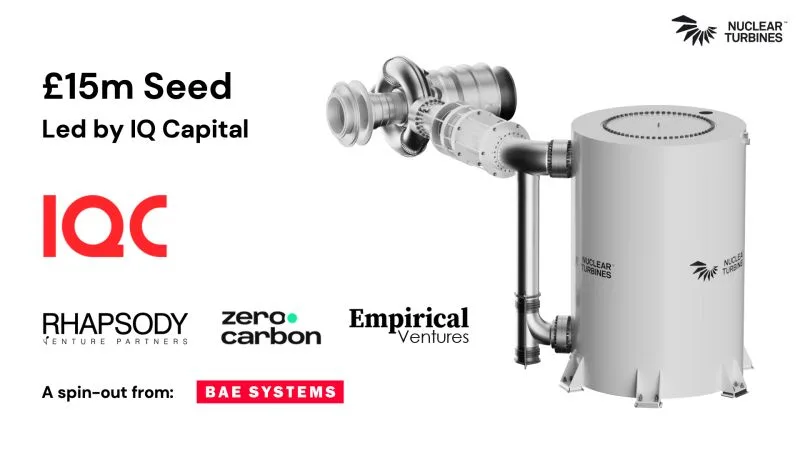
At the heart of Nuclear Turbines’ approach is a compact power system that integrates an advanced modular nuclear reactor with a gas turbine. By combining these technologies into a single, highly integrated system, the company aims to improve the economics of nuclear generation while reducing the physical footprint of nuclear power plants. A more compact architecture could simplify construction, lower infrastructure requirements, and enable faster deployment compared with conventional large-scale nuclear facilities.
The company’s modular philosophy also aligns with broader trends shaping the future of nuclear energy. Smaller reactors have the potential to supply reliable electricity to industrial facilities, support regional power grids, complement renewable energy generation, and strengthen energy security without requiring the massive investments associated with traditional nuclear projects. Because modular systems can be manufactured and deployed more efficiently, they may also reduce project risk while accelerating the adoption of carbon-free baseload power.
Beyond generating electricity, compact nuclear technologies could play an important role in powering energy-intensive industries, hydrogen production, advanced manufacturing, and future digital infrastructure such as AI data centers. As electricity demand continues to rise alongside global decarbonization efforts, scalable nuclear technologies capable of delivering continuous low-carbon power are attracting increasing attention from governments, utilities, and industrial operators alike.
Nuclear Turbines Raises £15 Million Led by IQ Capital
Nuclear Turbines recently emerged from stealth after securing £15 million in funding, led by IQ Capital, with participation from Rhapsody Venture Partners, Zero Carbon, and Empirical Ventures, alongside continued support from BAE Systems. The investment will help accelerate the development of the company’s compact nuclear power system while supporting engineering, commercialization, and expansion of its team, including the appointment of Lauren Dickerson as Chief Commercial and Strategy Officer.
The funding reflects growing investor confidence in advanced nuclear technologies as countries seek dependable sources of clean energy that complement renewable power generation. Unlike intermittent energy sources such as wind and solar, nuclear power provides continuous electricity regardless of weather conditions, making it increasingly important for maintaining stable electricity grids while reducing carbon emissions. At the same time, the industry is moving toward reactor designs that prioritize modularity, lower construction costs, and improved economic competitiveness.
For Nuclear Turbines, the investment represents an opportunity to translate decades of British nuclear engineering expertise into a commercially viable technology for the next generation of energy infrastructure. By combining advanced reactor design with gas turbine technology, the company aims to demonstrate that nuclear power can become not only cleaner but also smaller, more flexible, and significantly easier to deploy. If successful, its approach could contribute to reshaping how nuclear energy is delivered in an increasingly electrified and low-carbon world.
The future of nuclear energy will likely depend not only on safer reactor designs but also on making nuclear power economically competitive and easier to deploy. Compact, modular systems represent one of the industry’s most promising directions, offering the potential to reduce construction complexity while providing reliable low-carbon electricity. Nuclear Turbines is entering this rapidly evolving sector with a design that combines proven engineering principles with a fresh approach to modular nuclear generation. If its technology reaches commercial deployment, it could help broaden the role of nuclear energy in supporting decarbonization, industrial growth, and long-term energy security.