

Ravical: The Belgian Startup Building an AI Operating Platform for Professional Services Firms
How Belgium-Based Ravical Connects Client Intelligence, Professional Knowledge and AI-Powered Workflows?
Professional services firms have traditionally relied on experienced employees to manage client relationships, interpret regulations, prepare reports and identify opportunities for additional services. As client expectations rise and experienced professionals become harder to recruit, maintaining this model is becoming increasingly difficult. Belgian startup Ravical is building an AI platform designed to help these firms manage client work, make institutional knowledge accessible across teams and increase the capacity of their existing workforce.
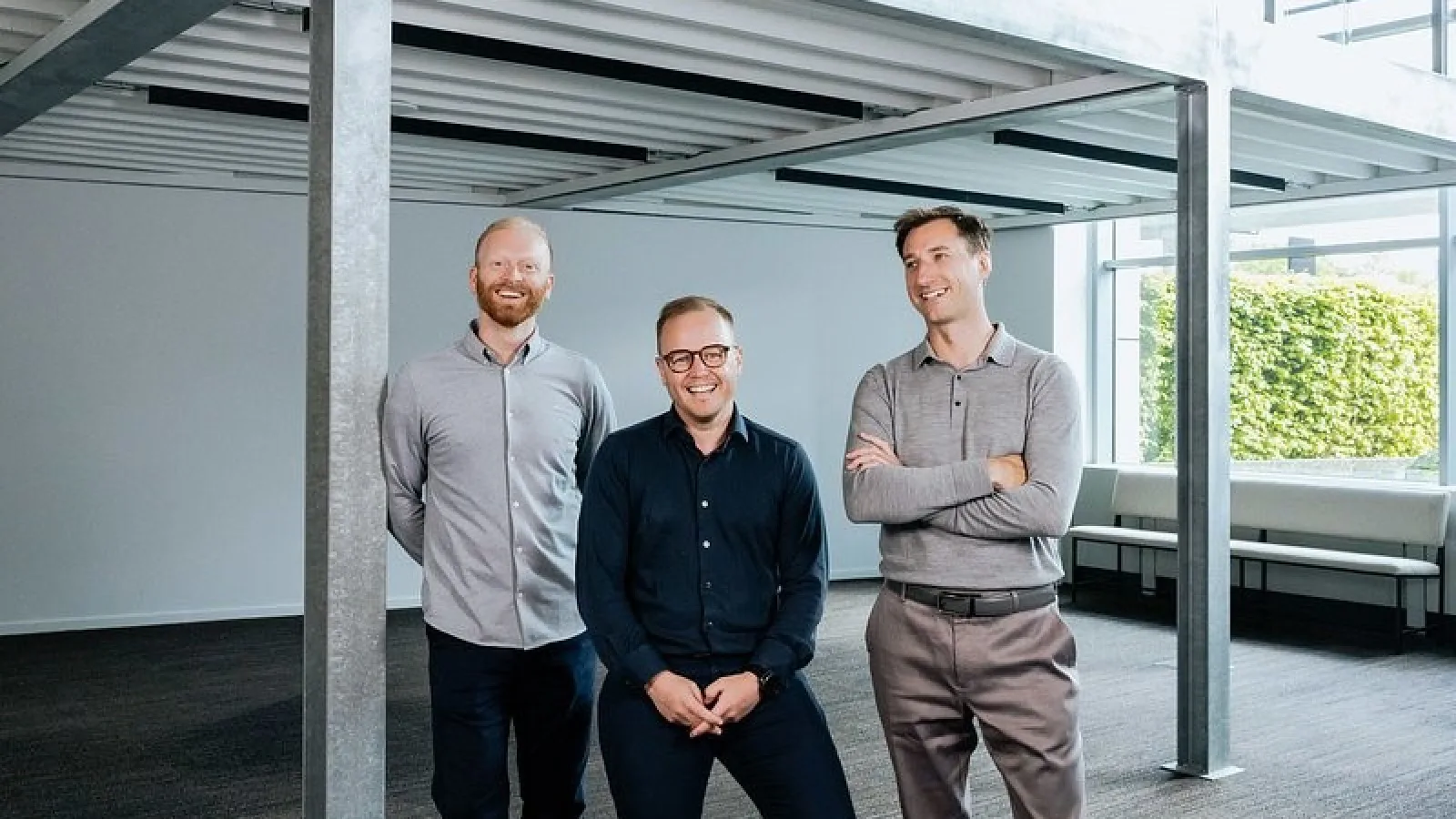
Founded in 2025 by Joris Van Der Gucht, Ken Bastiaensen and Benjamin Vandermarliere, Ravical is headquartered in Ghent, Belgium, with a presence in London. Van Der Gucht previously co-founded Silverfin, a cloud accounting platform used by more than 1,000 accounting firms across 18 countries. Bastiaensen serves as CTO, while Vandermarliere is the company’s Chief Product Officer.
Ravical primarily targets accounting and tax firms, while also developing solutions for HR and payroll providers, insurance brokers and buy-and-build platforms. The company says more than 100 accounting firms across Europe already use its platform.
At the centre of Ravical’s offering is an operating platform that connects client information, professional knowledge, business applications and AI-driven workflows. Its objective is to help firms identify work that needs to be done for each client, prepare that work using existing client information and make it available for professional review.
The platform is organised around four core components: Workspace, Domain Knowledge, Ecosystem and Control Room. Workspace brings together information from different business systems, including accounting software, CRM platforms, documents and client communications. It creates a consolidated view of client relationships and helps identify relevant developments, potential risks and opportunities for additional services.
For example, a client’s plans to expand internationally could create requirements around VAT, taxation, payroll and legal compliance. Ravical aims to recognise such developments from existing client information and surface relevant advisory opportunities to the firm. Its platform can also prepare the groundwork for these engagements by gathering client context, analysing implications and identifying the appropriate internal expertise.
Domain Knowledge provides access to professional and regulatory information. The system is designed to research areas such as tax, VAT, legislation and regulatory guidance, with answers supported by references to primary sources. This allows professionals to examine the underlying regulations and verify the information before using it in client work. The knowledge capabilities are also accessible through tools including Outlook, Word and Excel.
Ecosystem connects Ravical with the applications employees already use. Its integration approach covers accounting, practice management, CRM, document management and productivity software. The connections directory includes products such as Xero, QuickBooks, Silverfin, CCH, IRIS and Digita, alongside Microsoft 365. This allows firms to access information across their existing technology infrastructure without immediately replacing their core systems.
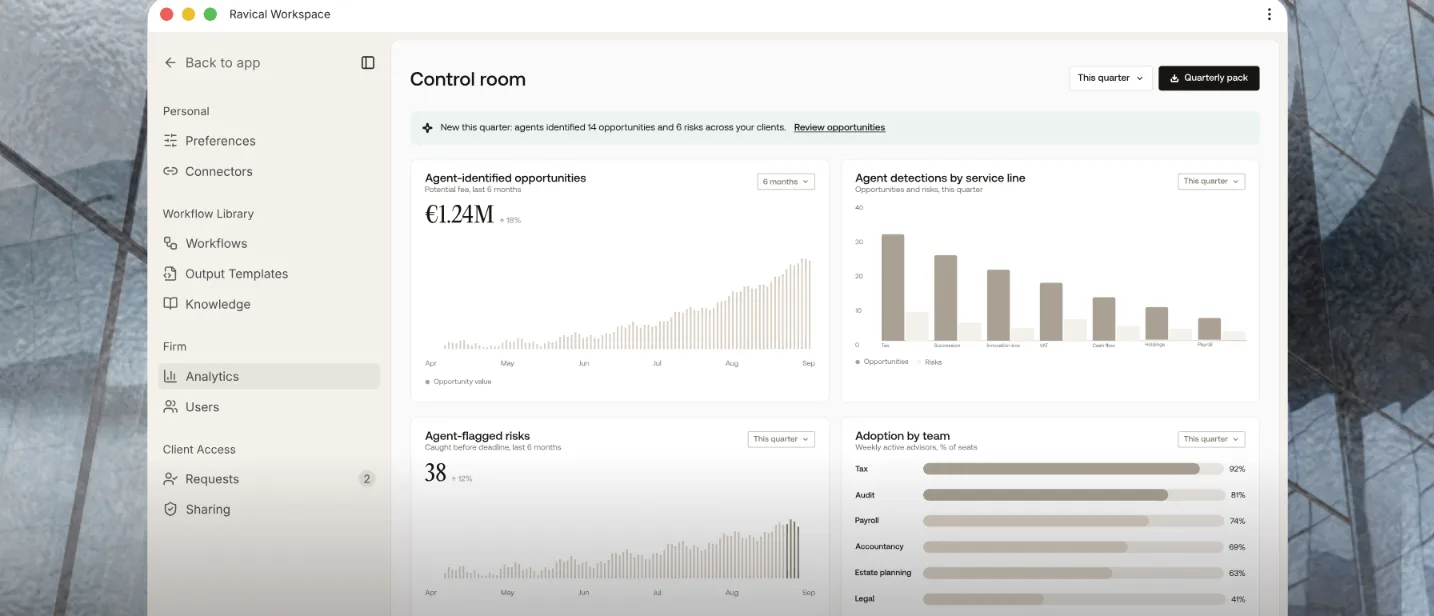
Control Room provides management and governance capabilities. It gives firm leadership visibility into AI activity, identified opportunities, usage, costs and business outcomes. The component is intended to help administrators understand how AI is being used across the organisation and assess the value generated by the platform.
Ravical’s industry-specific solutions reflect its broader focus on professional services. For full-service accounting firms, the platform aims to connect routine accounting, tax, audit, payroll and legal work with additional advisory requirements. For HR and payroll providers, employee changes, hiring activity and workforce developments can indicate opportunities for HR consulting and compliance services. Insurance brokers can use client business developments, such as expansion or equipment purchases, to identify potential changes in insurance requirements.
The company also targets buy-and-build platforms, particularly groups that acquire and consolidate multiple professional services firms. Such organisations often operate with different software systems, databases and internal processes. Ravical aims to connect information across these businesses, helping identify cross-selling opportunities, share specialist expertise and make client knowledge more accessible across the group.
In May 2026, Ravical launched its new Workspace, introducing capabilities for identifying client work, coordinating its preparation and supporting value-based pricing. Its approach includes workflows that gather relevant information, identify specialists and produce drafts for professional review. A billing agent also analyses pricing history, client context and the value of completed work to support pricing decisions. Human professionals remain responsible for reviewing and approving outputs.
On October 29, 2026, Ravical raised $17 million seed funding round led by MMC Ventures. Existing investors Lakestar and Pitchdrive participated alongside new investor Shapers. The company said it would use the capital to strengthen its presence in the UK, Belgium, the Netherlands and Germany, expand across Europe and enter the US market. The latest round brings its total funding raised to approximately $25 million, according to the company.
As professional services firms face growing demand for advisory work and constraints on hiring experienced talent, Ravical is building its business around making existing expertise available across larger client portfolios. Its platform brings together client intelligence, regulatory knowledge, software integrations and workflow execution, with a focus on helping firms increase service capacity and generate more revenue from existing client relationships.