

Wenti Labs Is Using AI Agents to Rethink Construction Site Workflows
How Singapore-Based Wenti Labs Is Bringing AI to Construction Sites?
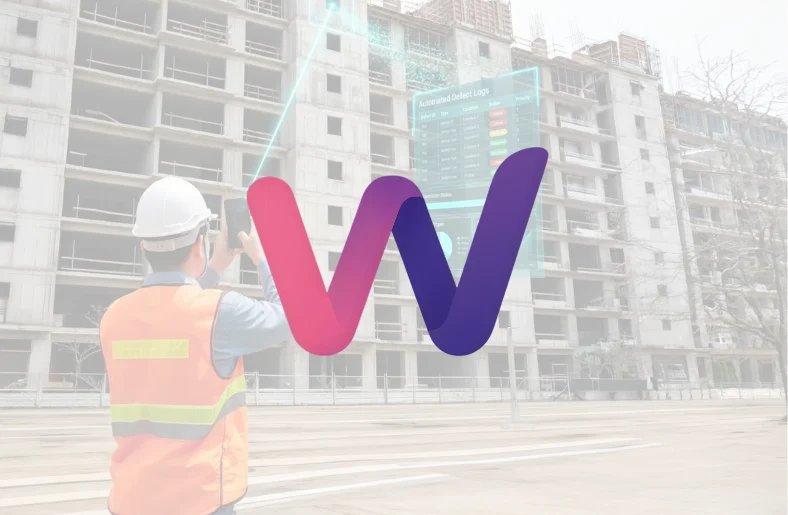
Construction remains one of the world’s most important industries, yet much of its daily workflow still depends on fragmented communication. Site teams exchange messages, send photographs, write reports, coordinate with contractors, and update project systems, creating huge amounts of information that can be difficult to organize and act upon. Singapore-based Wenti Labs is attempting to solve this problem with an AI-native operating system designed specifically for construction teams. Its AI agents integrate with the communication tools construction companies already use, turning unstructured site information such as messages, photos, and reports into structured data and actionable insights.
Instead of asking workers to completely change how they communicate, Wenti’s approach is to bring AI into existing workflows. This is important because construction sites are fundamentally different from traditional office environments. Project managers and site teams are constantly moving between locations, dealing with contractors, responding to issues, and making decisions based on information arriving from multiple sources. Wenti wants its AI agents to help capture that information, understand its context, and turn it into something the wider project team can use.
The company was founded in Singapore in 2023 and has already deployed its technology with construction organizations including Boustead Projects E&C, Penta-Ocean Construction, and Woh Hup. Its vision is essentially to create an AI layer that sits on top of existing construction communication and software systems, allowing teams to extract more value from information they are already generating every day.

How Can Wenti Labs Help Architects, Project Managers, and Construction Managers?
The potential value of Wenti Labs extends across the different groups involved in delivering a construction project. For project managers, AI agents can help transform daily site conversations and reports into structured updates, making it easier to understand what is happening across a project without manually reviewing every message or photograph. Construction managers can potentially use the same information to identify issues, track progress, and surface tasks that require attention. Architects and design teams can also benefit when site information needs to be communicated back to the people responsible for resolving design or construction questions.
The underlying challenge is that construction information is often scattered across different channels and formats. A photograph might contain evidence of a problem, while a message explains what happened and another report documents the resulting action. Human project teams can connect these pieces together, but doing so manually consumes significant time. Wenti’s AI agents are designed to perform more of that coordination automatically by extracting information from existing communication and connecting it with the tools used by construction organizations.
The company’s platform can therefore be viewed as more than a chatbot for construction. It is attempting to create an operational intelligence layer that converts everyday site activity into structured project information. This could eventually allow construction companies to automate repetitive reporting, improve information flow between site and office teams, and reduce the amount of time managers spend searching through messages and documents for answers. The approach is particularly relevant as construction companies increasingly adopt digital tools but still struggle with fragmented workflows. Rather than asking every worker to become a power user of another enterprise application, Wenti is trying to make the existing communication layer itself more intelligent.

The Future of AI in Construction: Can Wenti Labs Win the Race?
Wenti Labs is entering a construction technology market where AI could fundamentally change how projects are managed, but adoption will depend on whether these systems can deliver reliable results in environments where mistakes can be expensive. Construction involves complex schedules, multiple contractors, changing site conditions, safety requirements, and large volumes of documentation. An AI system therefore needs to understand context rather than simply summarize individual messages. Wenti’s focus on construction-specific AI agents gives it an opportunity to build that contextual understanding directly into its platform. The company has already demonstrated commercial traction, generating recurring revenue from enterprise customers before raising external funding.
In May 2026, Wenti Labs raised a pre-seed round led by Zacua Ventures, with participation from Aurum Investments and Feedback Ventures. The amount was not disclosed. The funding is intended to support engineering expansion, customer acquisition, and growth across Asia-Pacific markets including Japan and Australia. Zacua Ventures describes Wenti as an AI-native “Agent OS” for construction teams, highlighting its ability to automate on-site communication and reporting by embedding directly into existing communication channels. The larger opportunity is significant.
Construction generates vast quantities of operational data, but much of that information remains trapped inside conversations, photographs, spreadsheets, reports, and disconnected software systems. If Wenti can reliably convert that information into structured intelligence and automate the workflows that follow, it could help construction companies move from simply digitizing their operations to making them increasingly autonomous.
The challenge will be scaling across different construction companies, workflows, languages, and regulatory environments while maintaining the accuracy and trust required for high-stakes projects. If it succeeds, Wenti could become an important part of the emerging AI infrastructure for construction, turning the everyday chatter of a construction site into a source of real-time operational intelligence.